How to make a good profile picture for Facebook from one photo
Facebook profile pictures do not live in one neat place. People see them on your profile, beside comments, in groups, in Messenger, and in all the small social moments where they are deciding whether this feels like the real you. That is why a Facebook profile picture can fail even when it is technically a good photo.
If you already have one photo that looks like you, you usually do not need a reshoot. You need a version of that image that fits Facebook’s broader social context. Once you know what kind of identity the account needs to carry, OutSence can help you compare a few profile-ready directions from the same source photo.
Facebook needs a social identity not a performance
Instagram can lean more on mood. LinkedIn leans on credibility. Facebook is broader and messier than either of them. The same picture has to feel right to old friends, relatives, group members, neighbors, classmates, and sometimes people who only know you casually.
That is why weak Facebook profile pictures often feel off in a social way. They are too polished for everyday use, too distant to feel personal, or too intense for a platform where the account usually represents a whole social identity rather than one narrow role. A good Facebook profile picture should feel current, open, and easy to place.
Turn one photo into a Facebook profile picture that feels current
If you only have one usable photo, use a social-first workflow instead of trying to make the image look impressive:
- Choose the photo that already feels most like your real everyday self. Facebook works best when the image feels current and believable.
- Set a crop that keeps the face socially readable. In OutSence Create, frame the image so your face carries the profile without feeling too distant or too severe.
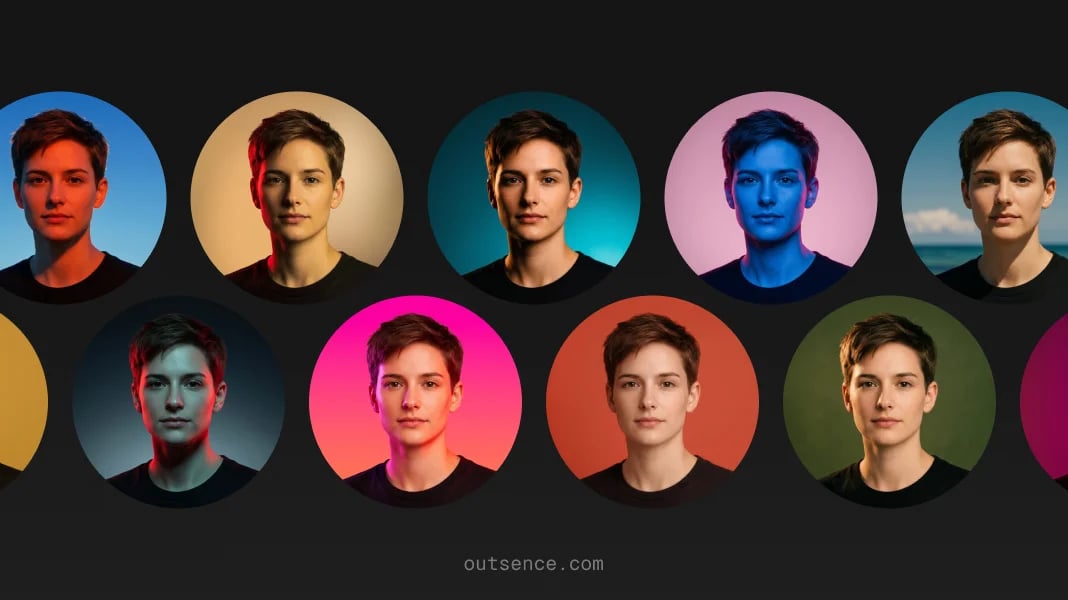
- Pick styles that improve clarity without changing your social tone. Clean, warm, balanced, and lightly polished usually work better here than dramatic transformations.
- Compare the versions as if friends and groups were already seeing them. Keep the one that feels easiest to recognize and easiest to trust.
- Choose the version that still feels like a normal profile photo. On Facebook, “right” usually beats “striking.”
Choose differently for personal public-facing or business use
For a personal Facebook profile, the safest answer is usually a current, friendly face. The image should feel like the version of you people expect to see in comments, Messenger, and shared posts.
For a public-facing personal profile, such as a local creator, community figure, or public expert, the photo can be a little cleaner and more deliberate. But it still should not feel detached from everyday identity. Facebook still carries more social familiarity than a platform like LinkedIn.
For a business-led presence, a logo may be better than a face if the page is really representing the brand rather than a specific person. A face-based profile picture is strongest when the page is person-led.
Quick Facebook reality check
Before you keep the final version, test whether the picture still works in normal Facebook use:
- Profile view: does it feel like the right image for your overall identity on the platform?
- Comments: would people immediately connect the picture to your name in a fast-moving thread?
- Groups: does it still feel appropriate in mixed public and semi-private community spaces?
- Messenger: does it feel human and recognizable in one-to-one contact?
- Relationship range: would this still feel right to friends, family, and weaker ties at the same time?
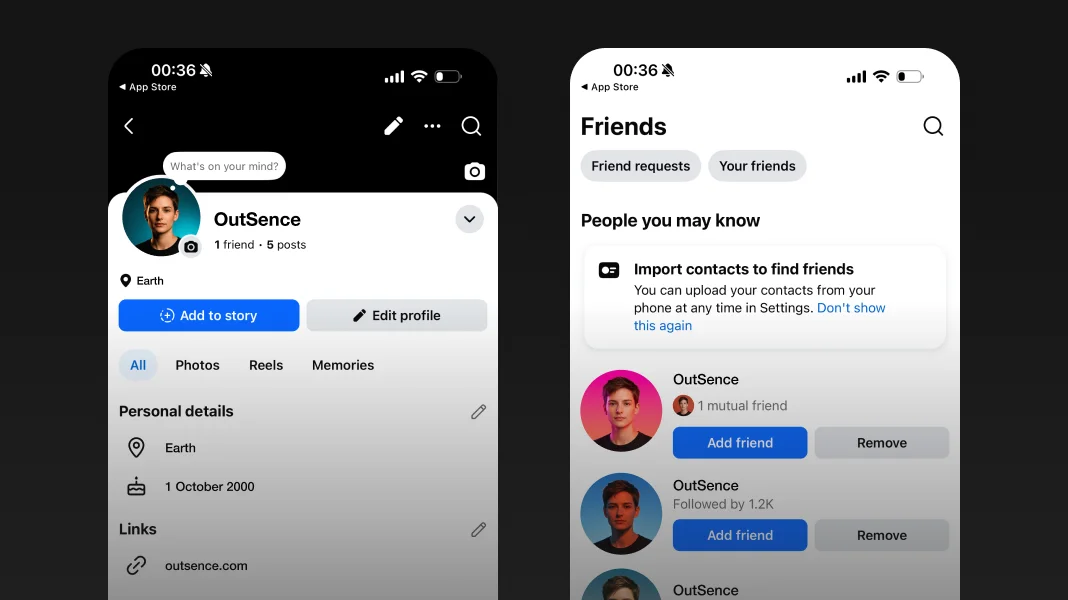
Facebook lets you change the picture but the base image still has to work
Verified on May 4, 2026
Facebook’s help center says you can add or change your profile picture, and its mobile help also notes that you can add a frame to an existing picture. The practical implication is simple: frames and edits are secondary. The base image still has to feel right first. If the face is too distant, too stiff, or too unlike your normal social identity, extra treatment will not fix the underlying mismatch. That is why starting with a clear, socially believable source image from one photo matters more than layering effects on top of a weak choice. Source Source
When OutSence helps on Facebook
OutSence helps most on Facebook when the original photo is already good enough, but not yet well-shaped for the platform’s broad social use. The point is not to reinvent yourself. It is to compare a few cleaner, more profile-ready versions from one image and keep the one that still feels most socially real.
That is especially useful if your current picture is close, but not quite right. Maybe it feels too formal, too flat, or too edited. In that case, start in OutSence Create, then compare the results in your OutSence gallery and keep the version that still feels like the person people know on Facebook.
Related guides
If you need to fix cropping and clarity next, continue with How to make your Facebook profile picture fit and stay clear. If you want broader comparison ideas, go to Best profile picture for Facebook — photo ideas and examples. If you need the technical reference page, read Profile picture for Facebook — size, crop, file format, and photo best practices.
FAQ
What kind of photo works best for a Facebook profile picture?
Usually the one that feels most current, open, and socially believable. Facebook rewards normal recognition more than strong styling.
Should a Facebook profile picture be more casual than a LinkedIn one?
Usually yes. Facebook covers broader social context, so the image should feel more everyday and less work-signaling.
When is a logo better than a face on Facebook?
When the account or page is truly brand-led rather than person-led. A face works best when people are meant to recognize the individual behind the profile.
When is OutSence worth using for Facebook?
When you already have one usable photo and want to compare a few socially right versions from the same image before choosing the best one.